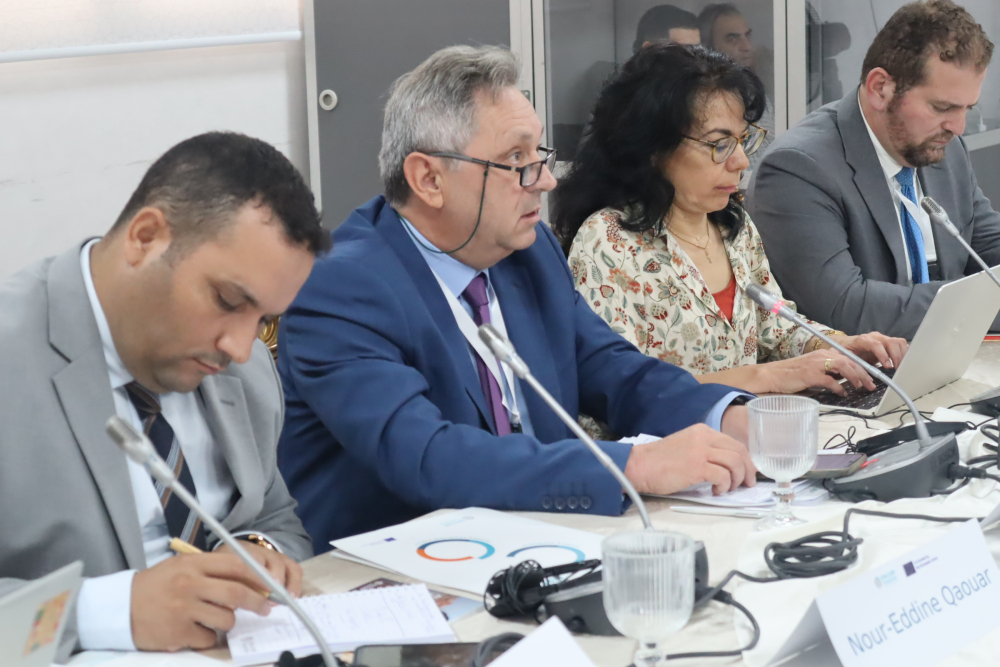
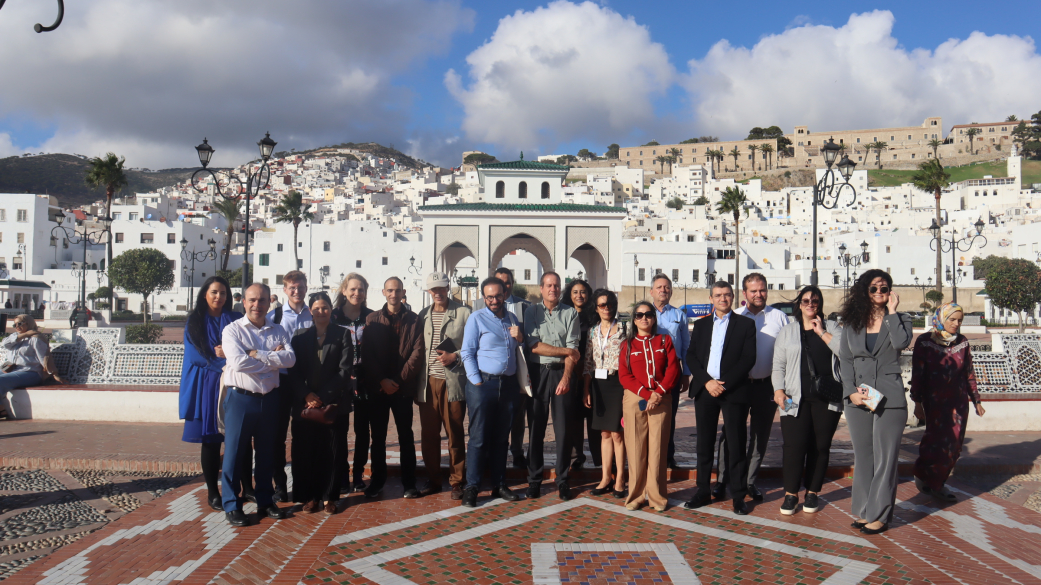
On 28–29 October 2026, the Anna Lindh Foundation brought together faith actors, researchers, practitioners and policymakers in Tetouan, Morocco, the 2026 Mediterranean Capital of Culture and Dialogue. The meeting was held as part of an ALF Policy Debate on strengthening intercultural cooperation in Euro-Mediterranean research, and it looked at the role of religious pluralism in times of crisis.
The discussions centred on three questions:
- how dialogue can be turned into joint action;
- how interreligious cooperation can become more inclusive;
- how religious heritage can be protected as a space for peace, reconciliation and local development.
Dr Christos Nasios represented the Interorthodox Centre of the Church of Greece, a member of the Greek Network of the Anna Lindh Foundation. He spoke on the panel “Religious Heritage as a Catalyst for Peace”, which looked at how to preserve and promote religious heritage as a vital part of Euro-Mediterranean identity and social cohesion, drawing on the Universal Code of Conduct on Holy Sites.
In his intervention, he argued that interreligious dialogue needs to become a dialogue of everyday life. In this kind of dialogue, members of different religious communities work together, and alongside civil society, to tackle the challenges and problems they share. Trust does not grow only from talking about one another. It grows above all from working together for something beyond ourselves, such as the environment and our cultural and religious heritage. He also presented successful examples of interreligious dialogue and cooperation from the initiatives and educational programmes of the Interorthodox Centre, and he spoke about the challenges that still remain in this field.
These two days were a chance not only to contribute but also to learn from others’ experiences, to be inspired, and to build bridges of cooperation with people who share the same values and vision.
Tetouan’s rich cultural heritage was a fitting setting for these exchanges. It gave tangible form to the questions at the heart of the debate: how we recognise our differences, how we care for our shared heritage, and how we build trust within our communities.